Back to all posts
5 min read
How to Make Your Product Design Website Tell Your Story
Learn how to make your product design website tell your story through your work, services, personality, and journey.

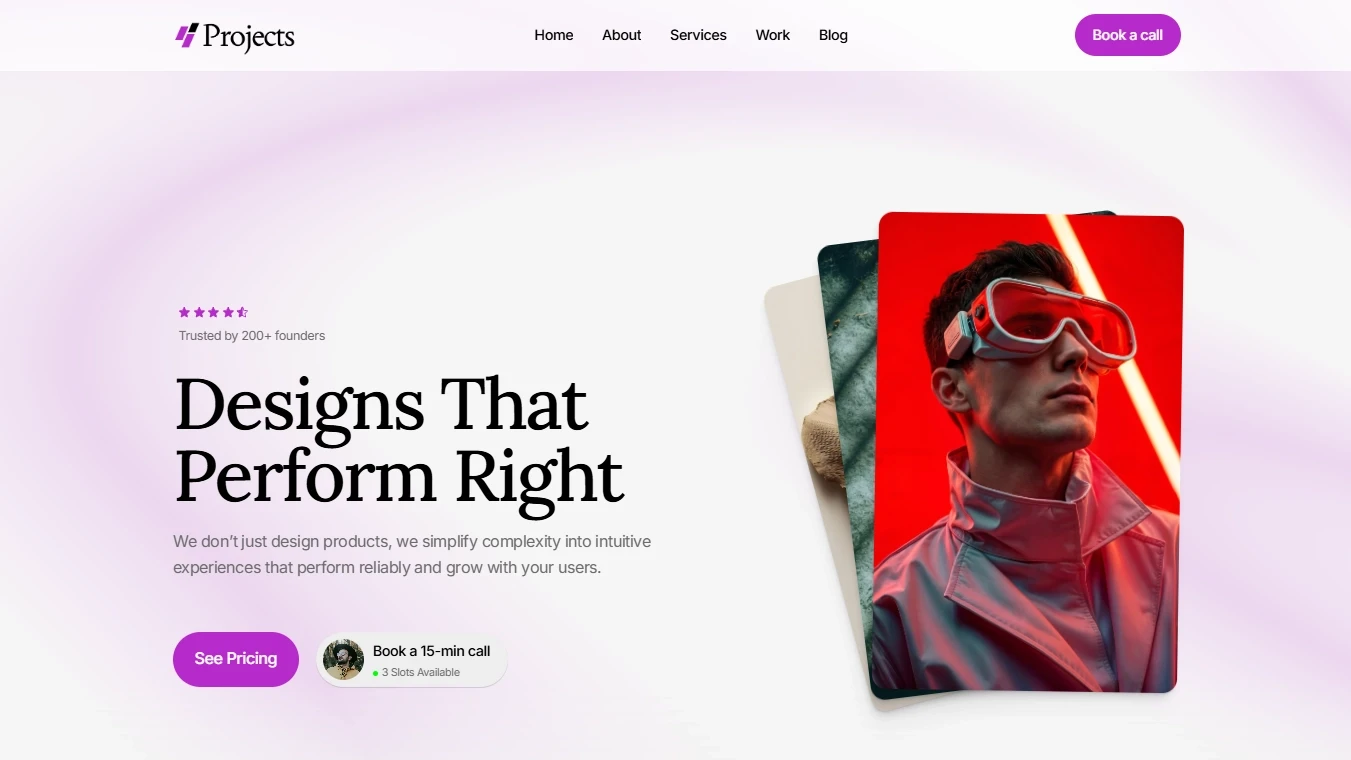
You'll learn what a product design website should include, from a strong hero and case studies to clear services, an About or Team section, and an easy contact form for potential clients to reach you directly.
Your Website Should Tell More Than Your Designs
Someone lands on your product design website. They see beautiful screens, polished mockups, and a few impressive projects. Everything looks good.
They keep scrolling. But after looking through your work, they may still be wondering:
“What do they actually do? Who do they work with? What kind of projects do they take on? And how can I contact them?”
That’s where a product design website can do more than simply display your work.
Here are five important parts your product design website should have if you want it to tell your story.
1. Start With a Hero Section That Introduces You
The first thing someone sees should give them a reason to keep exploring. Your headline should quickly make it clear that you’re a product design agency. You can use your company’s motto, explain what you do, or summarize your value in a single line. Then add a short description that gives a little more context about your work, experience, or approach.
Pair that with a high-quality visual showcasing some of your best work. A strong visual can immediately make your website feel more polished and give visitors a taste of what your agency can do.
And don’t forget about the CTA. Don’t add more than two. Your primary CTA should use your primary color, while the secondary CTA should have a more subtle appearance.
2. Let Your Case Studies Show How You Work
Now the visitor knows who you are.
The next question is:
“Okay, what have you actually worked on?”
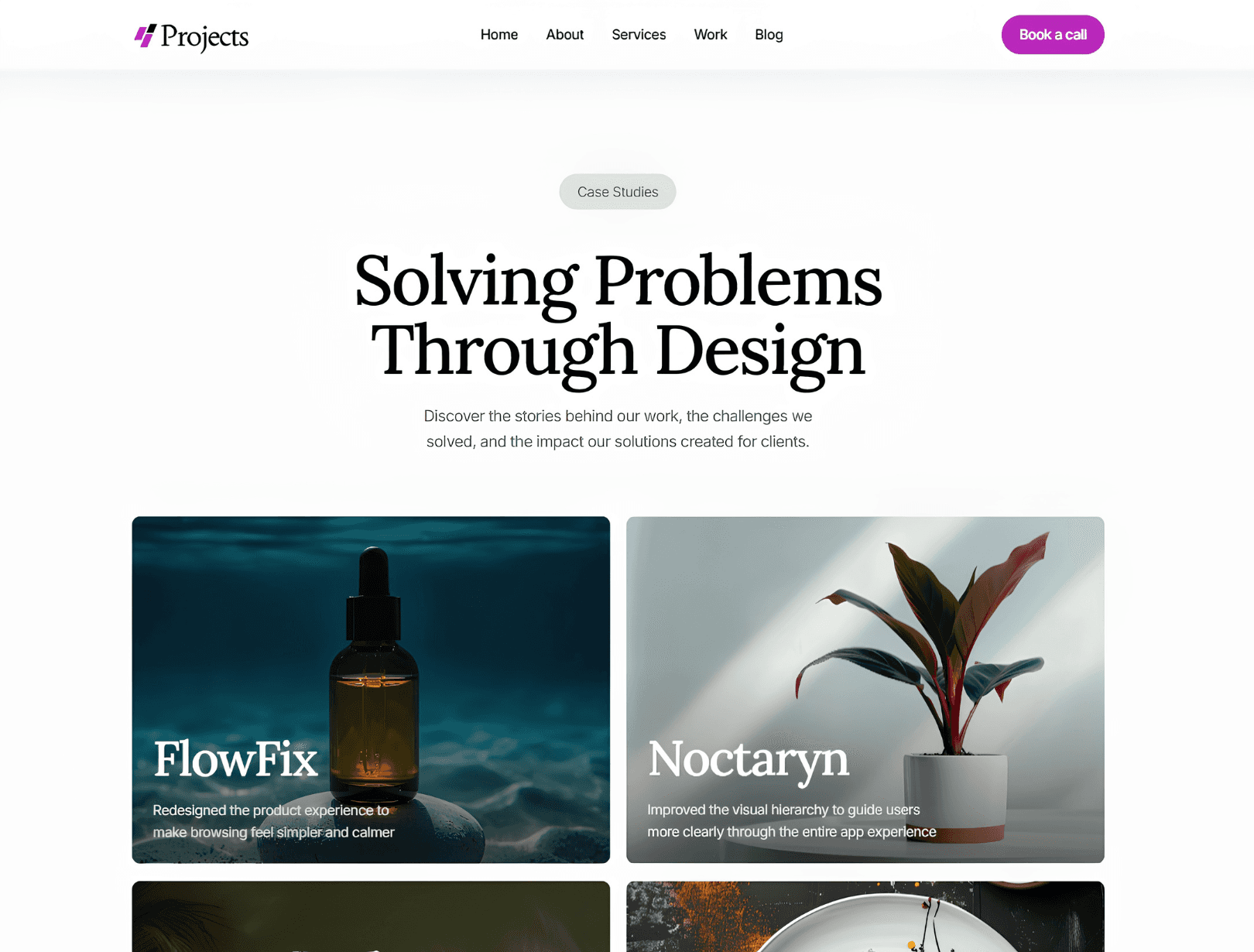
This is where your case studies come in. But your case studies shouldn’t feel like a collection of pretty screens.
Give each project some context. What problem were you solving? What did you create? And what changed because of the work?
You don’t need to explain every tiny detail. Just give visitors enough information to understand the project, the problem you solved, and your contribution to it.
3. Tell People What You Can Help Them With
Your visitors shouldn’t have to figure out what services you’re offering.
State the services you offer clearly:
Product design
UX/UI design
Design systems
Prototyping
UX research
Product strategy
But simply listing these services doesn’t tell a potential client much. Instead, explain what each service actually means for them.
For example, explain what’s included, what the typical process looks like, or how long the service usually takes.
You can also mention how many projects or client spots are currently available. This can create genuine urgency without making it feel pushy.
4. Let People Meet the Team Behind the Work
Your projects can show your ability as an agency. But there’s still a team behind those projects. That’s why your About page or Team section matters. Tell visitors a little about your company, how your team works, their background, and the kind of problems your agency solves.
You can also highlight some of your top achievements, notable clients, or milestones to give visitors more confidence in your experience.
You don’t need to write your company’s entire history. Just give people enough to understand who’s behind the work and what makes your team worth working with.
People don’t only hire good designers. They hire people they believe they can work with.
It gives your website something that most of the site can’t provide: personality.

5. Give Interested Visitors an Easy Way to Reach You
Now imagine someone has gone through your website.
They know who you are. They’ve seen your work. They understand your services. They’ve learned a little about your team. And now they’re thinking:
“How do I start a conversation?”
This is where your contact section or form comes in. Don’t make someone search through your entire website just to find a way to reach you.
A simple contact form might only need:
Name
Email
Company
What they need help with
A short message
And don’t ask for twenty different pieces of information before someone can send an inquiry. Keep it simple and actionable.
Your Website Should Feel Like One Story
These sections shouldn’t feel like five completely separate parts of your website. They should work together.
Meet the agency → understand what they do → see their work → get to know the team → start a conversation.
The hero introduces your agency. The case studies prove your ability. The services explain how you can help. The About or Team section makes the website more personal. And the contact section gives interested visitors a way to start working with your agency.
Every section should add something to the story.
Wrapping It Up
Your designs are an important part of that story. But they’re not the whole story.
Show people the agency behind the designs, the thinking behind the work, and the value you can bring to their next project.
If you want a product design website that gives your work the space it deserves while helping you tell your agency’s story, check out our Projects — Product Design Agency Website.
It’s designed to help product design agencies showcase their work, explain what they do, introduce the people behind the work, and give potential clients an easy way to get in touch.
Explore More Related Articles
Continue Reading
Real Estate
Top 5 Reasons Your Real Estate Website Might Be Losing Clients
5 min read
Sep 12, 2026
Real Estate

Continue Reading
Real Estate
What Should the First 10 Seconds on a Realtor Website Feel Like?
5 min read
Sep 9, 2026
Real Estate

Continue Reading
Real Estate
Is Your Design Studio Website Making These 5 Mistakes?
5 min read
Sep 5, 2026
Real Estate

Continue Reading
Real Estate
What Home Buyers Actually Look for on a Realtor's Website
5 min read
Aug 30, 2026
Real Estate