Back to all posts
5 min read
How to Choose the Best Real Estate Website Template
Top 5 things to look for in a real estate website template, whether you're an agency or a solo realtor.


Learn how to choose the best real estate website template by comparing essential features like property listings, search and filtering, mobile responsiveness, easy content management, SEO, and lead generation.
Why Your Template Choice Matters
So you’re a realtor, or you run a real estate agency, and you’ve decided it’s finally time to get a proper website. Good call.
But then you open a template marketplace and… there are hundreds of them. Half look the same. The other half look like someone’s cousin made them in 2014.
Don’t worry. You don’t need to check every single template out there. You just need to know what actually matters.
Here are the 5 things your real estate website template absolutely needs to have.
Before we get into the details: if you want to see how a clean property listing can be structured, check out Listings Starter. It’s FREE to grab.
1. Smart Property Filtering
Imagine walking into a real estate office and the agent just hands you a giant photo album of every house they’ve ever sold. No categories, no order, nothing. You’d walk right out. That’s exactly what happens on a website with no filtering.
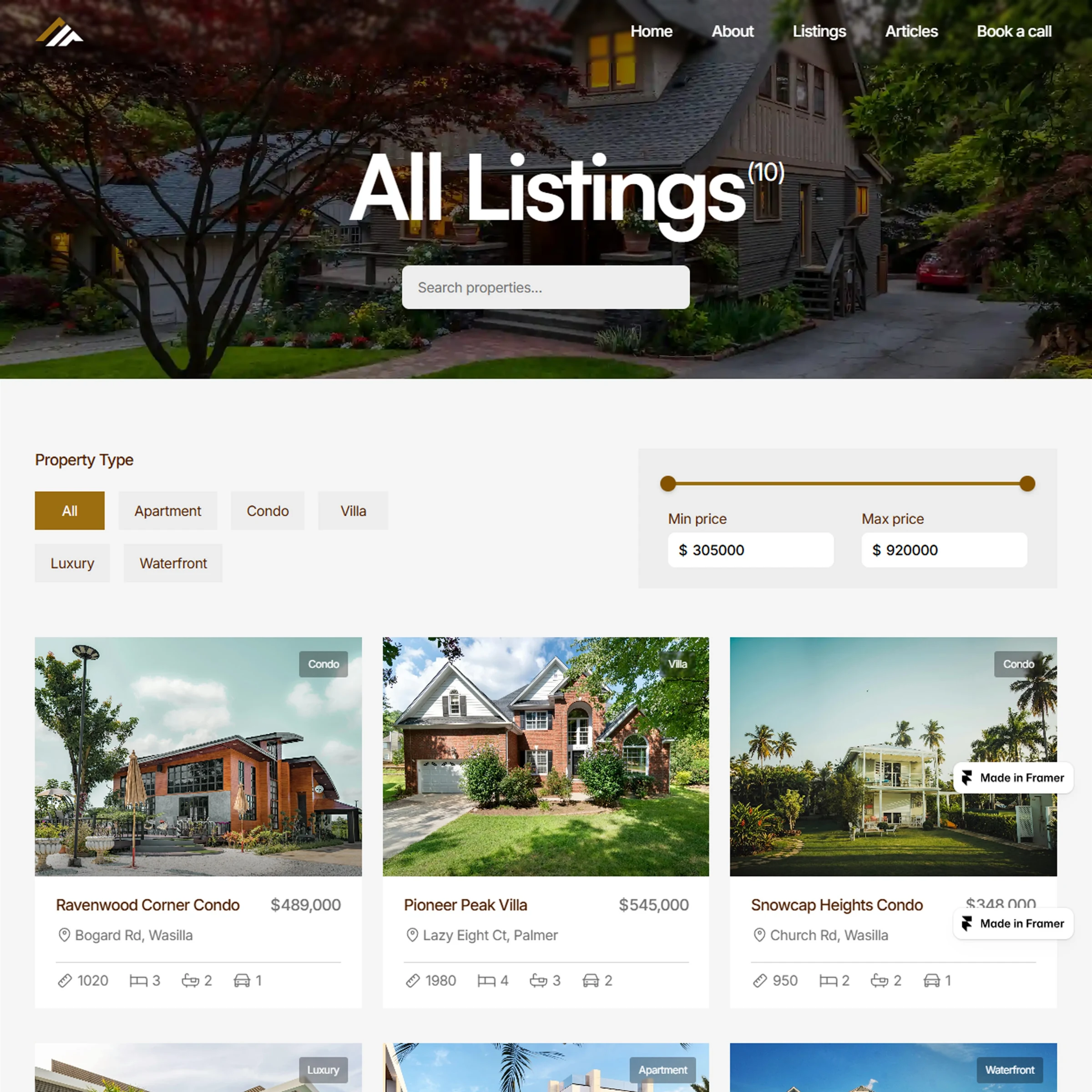
Your template needs to let people filter properties the way they actually search:
Property type – house, apartment, villa, commercial, land, etc.
Search bar – so people can type a location or keyword directly.
Price slider – buyers usually have a budget in mind, so let them choose the right one.
A quick example: someone lands on your site looking for an apartment under $150,000 in a specific neighbourhood.
If they can filter that in 10 seconds, they’ll trust your site. If they have to scroll through 40 unrelated listings, they’ll bounce to a competitor’s page in the same 10 seconds.
2. Fully Responsive Design, Especially on Mobile
Here’s a stat worth knowing: a large chunk of real estate searches now happen on phones, not desktops. People check listings while waiting in line, during lunch breaks, or lying in bed at 11 PM thinking about buying a house they can’t afford yet. We’ve all been there.
If your template isn’t built mobile-first, you’re basically closing your shop for most of your visitors.
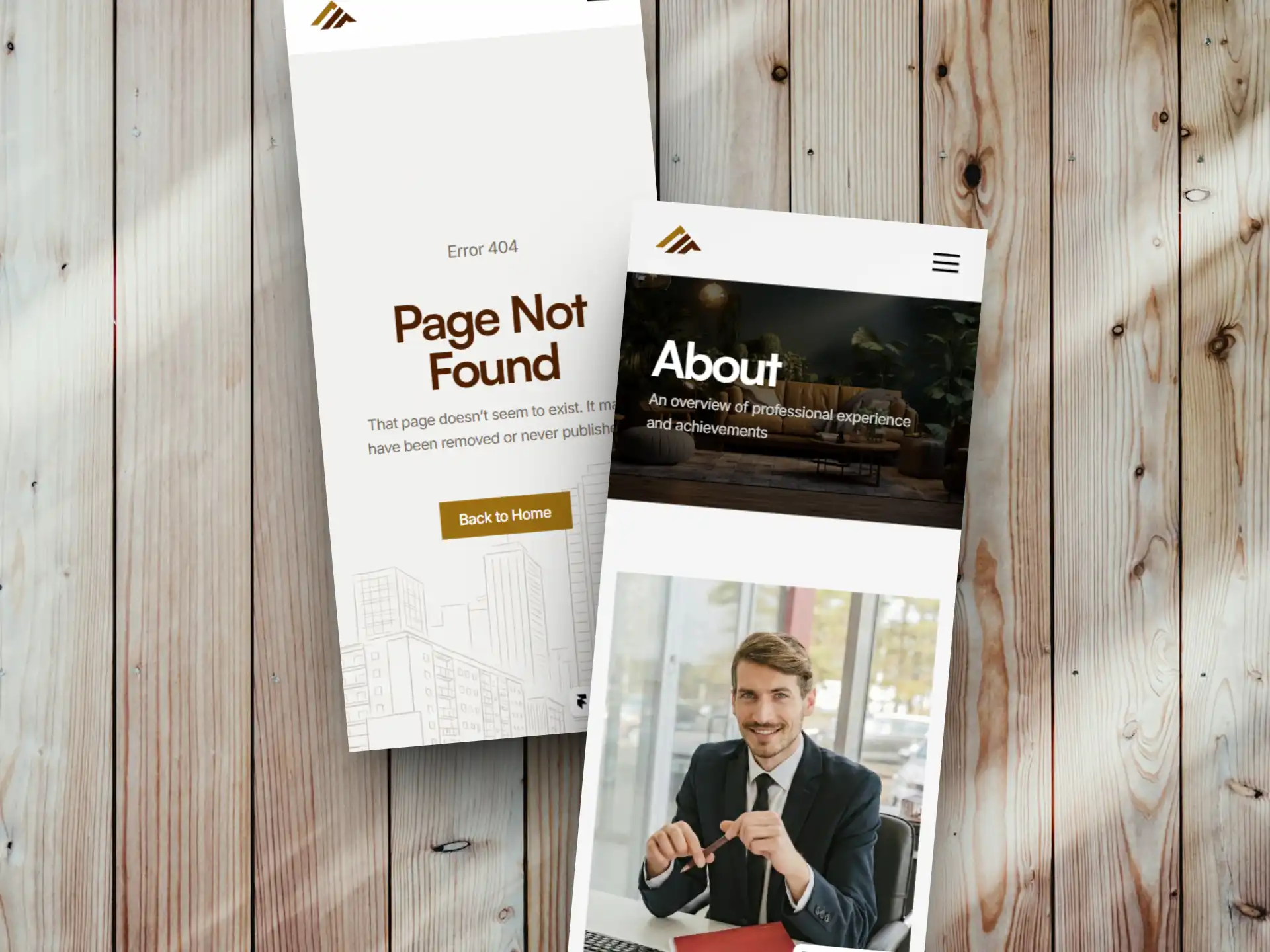
What “fully responsive” actually means for a real estate site:
Property images and cards resize properly.
Filters and search bars are still usable with just a thumb.
Buttons are big enough to tap without zooming in.
Contact forms don’t turn into a broken mess on smaller screens.
Before picking any template, open the demo on your own phone. Not your laptop, not your tablet. Your actual phone. If it feels clunky there, skip it.
3. Easy CMS Control
You’re a realtor, not a web developer. You shouldn’t need to hire someone every time you get a new listing or a property gets sold.
This is where CMS (Content Management System) comes in.
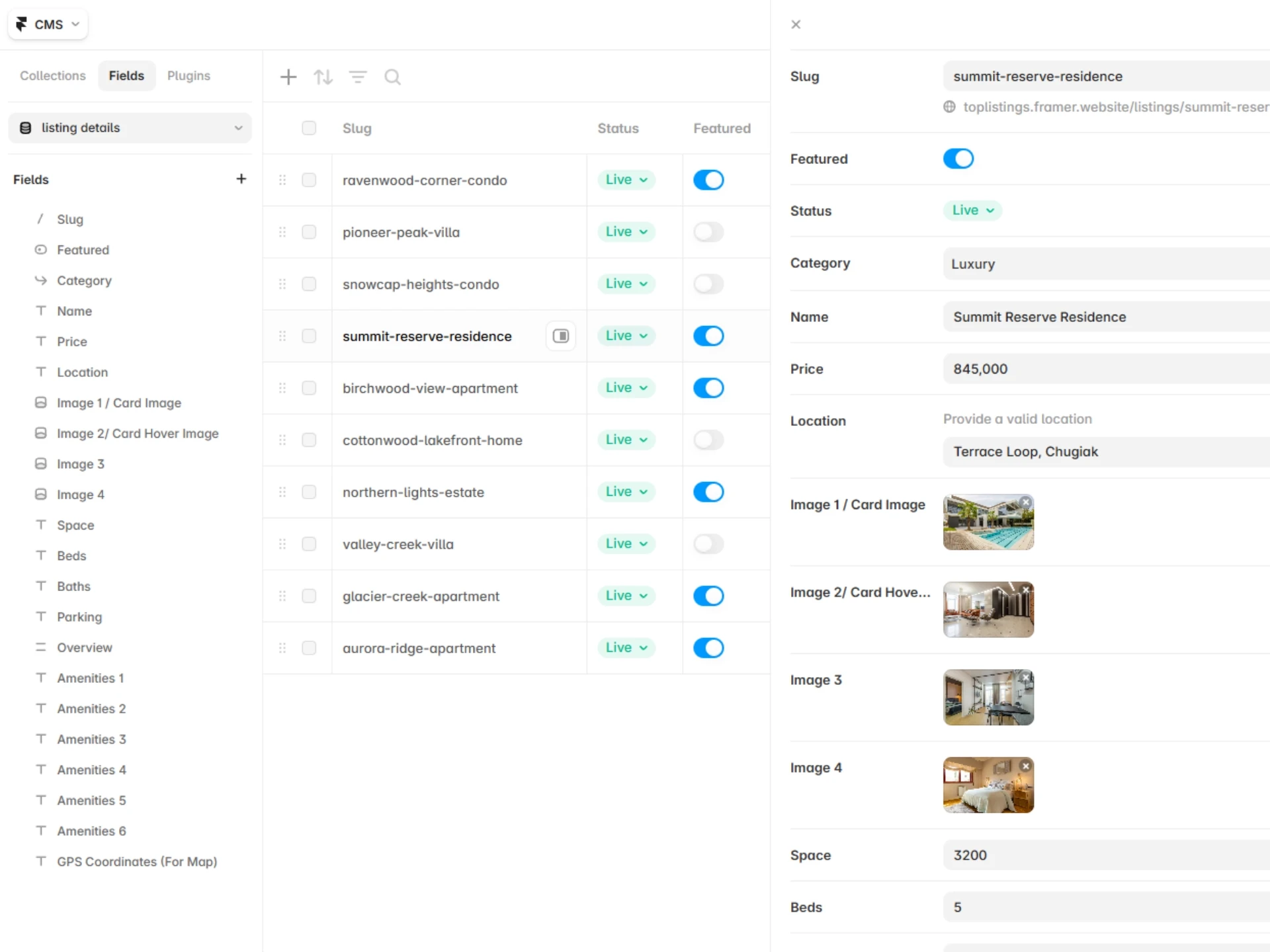
Think of CMS like filling out a simple form:
Add a property: Fill in the price, location, images, and description in labeled fields.
Update a listing: Change the price or mark it as “sold” in a couple of clicks.
Remove old listings: Delete without touching any design elements.
No coding. No calling your developer at 9 PM asking why the layout broke. Just fill, save, done.
Good real estate templates are built so the CMS handles listings this way. This alone can save you hours every month.
4. SEO & Performance Optimization
A beautiful website that nobody finds on Google is like opening a store in the middle of a forest. It might look great, but no one’s walking in.
Here’s what a well-optimized real estate template should have:
Proper heading structure: One H1 per page, followed by organized H2s and H3s for sections.
Alt text on images: Every property photo should have a short description.
Minimal heavy animations: Fancy animations look cool for about five seconds, then they slow your site down and frustrate visitors, especially on mobile data.
Fast loading speed: Slower sites lose visitors within seconds. Speed isn’t a bonus feature anymore, it’s the baseline expectation.
A template that’s built with clean code and proper SEO structure gives you a real shot at showing up when someone searches “real estate agent near me” or “homes for sale in [your city].”

5. The Right Pages and Sections for Real Estate
Your website doesn’t need 15 sections to look “complete.” It needs the right ones, placed in a way that guides visitors toward one goal: contacting you.
Here’s what should be included:
Clean Hero
Process Section
Featured or recent listings
Services section
Testimonials
Contact form
The key word here is “essential.” Avoid stacking every trendy section you’ve seen on other websites.
Wrapping It Up
Picking a real estate website template doesn’t have to be complicated. If a template checks these boxes, you’re already ahead of most agents and agencies still using outdated, clunky websites.
If you want a template that already has these essentials built in, check out Listings, a complete real estate website solution. It’s designed for agencies and solo realtors who want a website that actually works, not just looks nice.
Not ready to commit just yet? You can start with Listings Starter. It’s FREE to grab, so you can explore the template and see how it works before deciding.
Explore More Related Articles

Continue Reading
Real Estate
Top 5 Reasons Your Real Estate Website Might Be Losing Clients
5 min read
Sep 12, 2026
Real Estate

Continue Reading
Real Estate
What Should the First 10 Seconds on a Realtor Website Feel Like?
5 min read
Sep 9, 2026
Real Estate

Continue Reading
Real Estate
Is Your Design Studio Website Making These 5 Mistakes?
5 min read
Sep 5, 2026
Real Estate

Continue Reading
Real Estate
How to Make Your Product Design Website Tell Your Story
5 min read
Sep 2, 2026
Real Estate